Communicating with Home Care Workers
Understanding the Basics
One of the most common mistakes adult children handling day-to-day care tasks make with communicating with home care workers is trying to figure everything out alone. There are professionals, community resources, and technology tools designed to help. Your parent's doctor, a social worker at the local hospital, and your Area Agency on Aging can all play a role. The key is knowing which resource to tap for which problem, and building those connections before you need them urgently.

Start by writing down everything you currently know about your parent's situation related to communicating with home care workers. Then write down everything you do not know. That second list is your roadmap. Work through it systematically, starting with the items that have the most immediate impact on your parent's safety and quality of life. Do not try to tackle everything in a single weekend. Sustainable caregiving is a marathon, not a sprint, and pacing yourself prevents the burnout that derails so many well-intentioned family caregivers.
Communication is the foundation of good caregiving, and it is especially important when dealing with communicating with home care workers. Make sure every family member involved in your parent's care has access to the same information. Use a shared document, a family group chat, or a caregiving coordination app to keep everyone updated. When information lives in one person's head, things get missed. When it lives in a shared system, the whole family can contribute and stay aligned.
How This Impacts Daily Caregiving
Your parent's preferences matter in every decision related to communicating with home care workers. Whenever possible, include them in the conversation. Even when cognitive decline is a factor, most seniors can still express preferences about their daily routines, their comfort, and their values. Respecting their autonomy, even within the constraints of their health situation, preserves their dignity and strengthens your relationship with them during a difficult time.
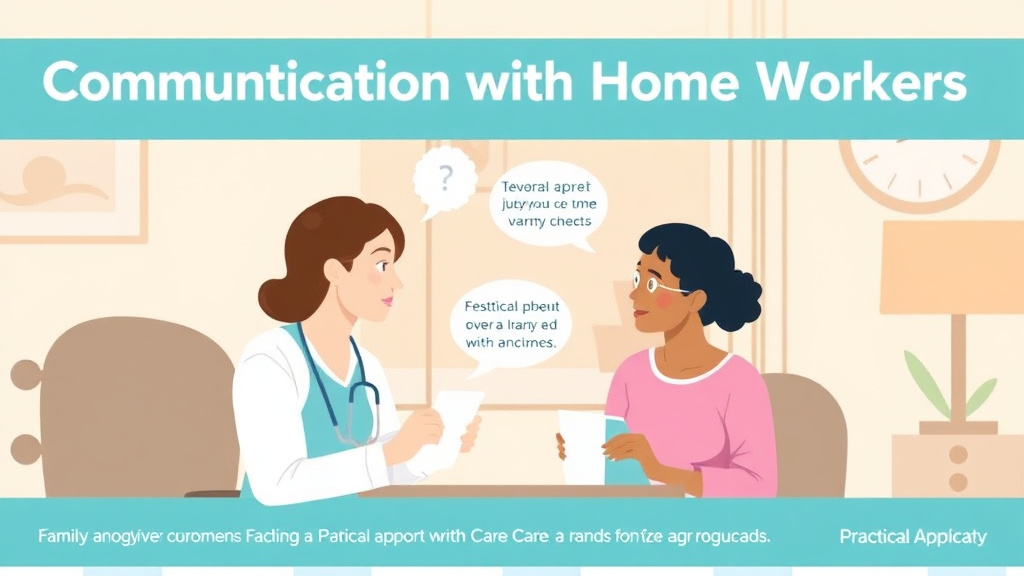
Documentation is one of the most underrated tools in caregiving. Keep a running log of symptoms, medications, doctor visits, insurance claims, and any changes in your parent's condition. This log becomes invaluable during doctor appointments, insurance appeals, care transitions, and family discussions about next steps. It also protects you legally if questions ever arise about the care decisions you have made on your parent's behalf.
Technology has made many aspects of communicating with home care workers easier than they were even five years ago. Telehealth visits reduce transportation burdens. Medication management apps send automatic reminders. Shared calendars keep family caregivers coordinated across time zones. GPS trackers provide peace of mind for wandering risks. A shared list, a simple calendar, and the right printed materials go a long way toward managing all of this. The goal is not to add more complexity, but to consolidate what you are already doing into a system that works.
Communicating with Home Care Workers: Quick Reference
| Product Category | Top Recommendation | Price Range | Best For | Where to Buy |
|---|---|---|---|---|
| Shower chair | Drive Medical Premium | $40-$80 | Stability during bathing | Amazon, medical supply stores |
| Grab bars | Moen SecureMount | $25-$50 each | Bathroom and hallway safety | Home Depot, Lowe's |
| Pill organizer | MedCenter 31-Day | $20-$35 | Complex medication schedules | Amazon, pharmacies |
| Medical alert system | Medical Guardian | $30-$50/month | Fall detection, emergency response | Direct from provider |
| Incontinence supplies | Prevail Premium | $15-$30 per package | Overnight protection | Amazon, Walmart, pharmacies |
Your Options Explained
If you are feeling overwhelmed by communicating with home care workers, you are not alone, and you are not failing. Caregiving is genuinely hard work, and the learning curve is steep. Give yourself permission to not know everything right away. Focus on the next right step rather than trying to solve every problem at once. And remember that asking for help, whether from family, friends, professionals, or technology, is a sign of strength, not weakness.
Quality of life should guide every decision you make about communicating with home care workers. It is easy to get caught up in medical metrics, insurance paperwork, and logistical challenges, and lose sight of what actually matters to your parent: comfort, connection, dignity, and as much independence as their health allows. Check in regularly with yourself about whether the choices you are making serve those goals, and adjust course when they do not.
Every caregiving situation is different, and what works for one family may not work for yours. The advice in this guide on communicating with home care workers should be adapted to your parent's specific health conditions, your family dynamics, your geographic location, and your financial resources. Use it as a starting framework, then customize based on what you learn through experience. The best care plan is one that evolves as circumstances change.
Managing communicating with home care workers? See the $29 Doctor Visit Pack. Build yours in about 2 minutes.
Cost and Coverage Considerations
When evaluating options related to communicating with home care workers, get information from multiple sources before making a decision. One doctor's opinion, one insurance representative's answer, or one facility's brochure does not give you the full picture. Cross-reference what you learn, and pay special attention to information from people who have been through similar situations. Caregiver support groups, both in-person and online, are excellent sources of real-world experience.
Legal considerations often intersect with communicating with home care workers in ways that catch families off guard. Make sure your parent's legal documents, including power of attorney, healthcare proxy, and advance directives, are current and accessible. If these documents do not exist yet, prioritize getting them set up while your parent can still participate in the process. An elder law attorney can help, and many offer free initial consultations.
Planning ahead is the single most valuable thing you can do when it comes to communicating with home care workers. Most caregiving crises are predictable in category, if not in timing. Falls, hospitalizations, cognitive decline, and care transitions are all common events that can be planned for. Having a playbook for each scenario, even a rough one, dramatically reduces stress and improves outcomes when these events occur.
Making Your Plan
As you work through the details of communicating with home care workers, keep a list of what is working and what is not. Review this list monthly and make adjustments. Caregiving is not a set-it-and-forget-it operation. Your parent's needs will change, your capacity will fluctuate, and external factors like insurance coverage and available services will shift. Regular review and adjustment keep your care approach effective and sustainable over the long haul.
Most adult children handling day-to-day care tasks discover the importance of communicating with home care workers only after a crisis forces the issue. By then, decisions feel rushed, options feel limited, and stress levels are already through the roof. The better approach is to educate yourself now, even if the need does not feel urgent yet. Understanding what is ahead gives you time to plan, compare options, and make choices that reflect your parent's values rather than just what is available in the moment. This guide walks you through what you need to know in practical, plain language.
The medical system was not designed with family caregivers in mind. Doctors have limited appointment time. Insurance companies use jargon that obscures more than it clarifies. Care facilities have their own rules and acronyms. As the person coordinating your parent's care, you are expected to navigate all of these systems at once, often without training or support. That is why understanding communicating with home care workers matters so much. It gives you the vocabulary and framework to advocate effectively for your parent across every interaction.
Try our free tools
Frequently Asked Questions
One of the most common mistakes adult children handling day-to-day care tasks make with communicating with home care workers is trying to figure everything out alone. There are professionals, community resources, and technology tools designed to help. Your parent's doctor, a social worker at the local hospital, and your Area Agency on Aging can all play a role. The key is knowing which resource to tap for which problem, and building those connections before you need them urgently.
Start by writing down everything you currently know about your parent's situation related to communicating with home care workers. Then write down everything you do not know. That second list is your roadmap. Work through it systematically, starting with the items that have the most immediate impact on your parent's safety and quality of life. Do not try to tackle everything in a single weekend. Sustainable caregiving is a marathon, not a sprint, and pacing yourself prevents the burnout that derails so many well-intentioned family caregivers.
Communication is the foundation of good caregiving, and it is especially important when dealing with communicating with home care workers. Make sure every family member involved in your parent's care has access to the same information. Use a shared document, a family group chat, or a caregiving coordination app to keep everyone updated. When information lives in one person's head, things get missed. When it lives in a shared system, the whole family can contribute and stay aligned.
Related Articles
- Tube Feeding Care at Home
- Tracheostomy Care at Home
- Feeding an Elderly Parent with Dysphagia
- Rehabilitation Facility Coordination
Walk Into the Next Visit Prepared
CaregiverPilot's $29 one-time Doctor Visit Pack builds a personalized visit prep sheet, medication log, and symptom tracker from your own answers.
$29 one time. Optional Care Companion membership $6.99/mo or $39/yr. 30-day money-back guarantee.